
Login für Abonnenten

Please log in to read subscribed content.


  • Content
  • Events Calendar
  • Editorial team
  • Subscription
  • Media
  • Newsletter
wire
wire
  • Reports
  • Business
  • Research + Development
  • Products
  • Whitepaper
  • Call umformtechnik.net
  • Issues digital
search.box
  • Content
    • Reports
    • Business
    • Research + Development
    • Products
    • Whitepaper
    • Call umformtechnik.net
    • Issues digital
  • Events Calendar
  • Editorial team
  • Subscription
  • Media
  • Newsletter

24/09/2020 – Weaving technology

Woven cellular metals made of wires

A team of researchers at the TU Dresden has succeeded in producing three-dimensional cellular metals from wires with the help of weaving technology. The patented structure enables the production of metallic lightweight materials with a wide range of properties and offers new possibilities for lightweight metal construction.
Previous image Next image
Zellulare-Metalle.jpg

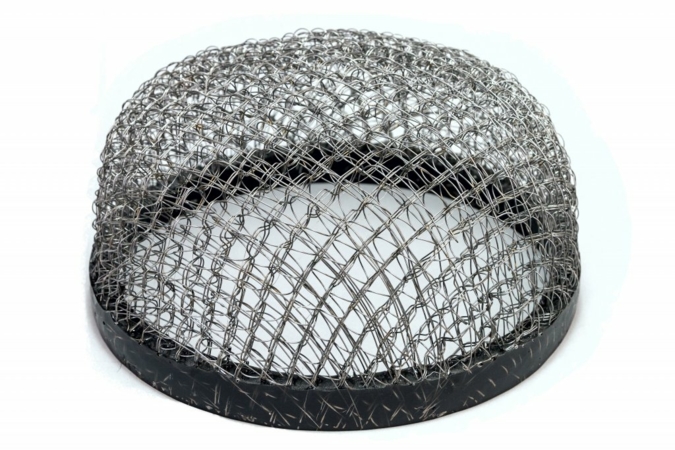
Fig. 6: Spatially transformed cellular metal. © ITM, TU Dresden, Mirko Krziwon
 
Zellulare-Metalle.jpg

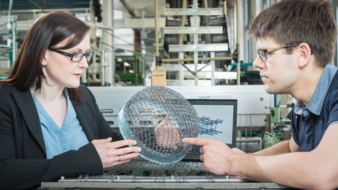
Fig. 1: Cellular metals from wire developed at the ITM of TU Dresden. © ITM, TU Dresden, Mirko Krziwon
 
Zellulare-Metalle.jpg

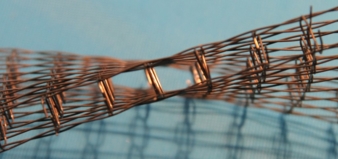
Fig. 2: Cubic cell geometry. © ITM, TU Dresden, Mirko Krziwon
 
Zellulare-Metalle.jpg

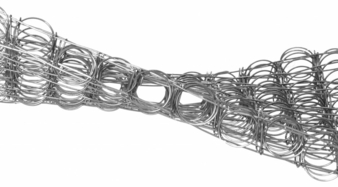
Fig. 3: Cylindrical cell geometry. © ITM, TU Dresden, Mirko Krziwon
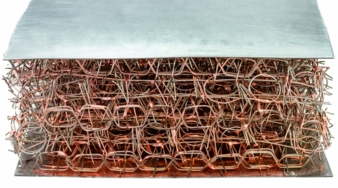
 
Zellulare-Metalle.jpg

Fig. 4: Multilayer cell composite with closed cover surface . © ITM, TU Dresden, Mirko Krziwon
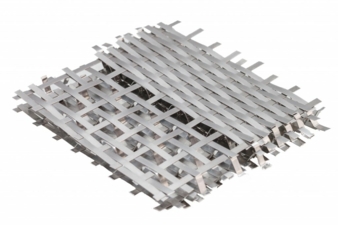
 
Zellulare-Metalle.jpg

Fig. 5: Cellular metal from flat wire with closed and open cover layer areas. © ITM, TU Dresden, Mirko Krziwon
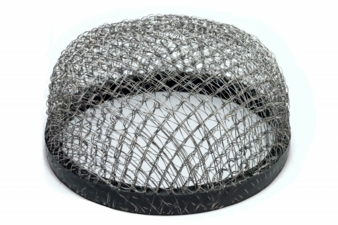
 
Zellulare-Metalle.jpg

Fig. 6: Spatially transformed cellular metal. © ITM, TU Dresden, Mirko Krziwon
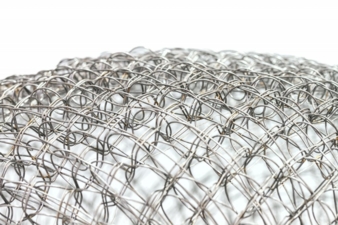
 
Zellulare-Metalle.jpg

Fig. 7: Detail of the shaped cellular metal. © ITM, TU Dresden, Mirko Krziwon

 
Back to article

Further articles for:

  • Institute for Textile Machines and Textile High Performance Materials Technology at TU Dresden
  • ITM
  • TU Dresden
  • weaving
  • cellular metals
  • joining
  • lightweight
Jörg Dambock
Editor-in-chief

Jörg Dambock

Institute for Textile Machines and Textile High Performance Materials Technology at TU Dresden

  Show company
  • Most read
  • Latest

02/04/2026

A long-term vision for spring manufacturing

Coiling the future

By  Jörg Dambock

14/11/2025

Steel cable stranding equipment

The future of stranding is here

By  Jörg Dambock

20/03/2026

Precisely addressing the core of digitalisation

The origin of digital VR

By  Jörg Dambock

26/03/2026

Stranding

A digital brain for heavy-duty stranding

By  Jörg Dambock

07/04/2026

Most‑Read Insights

Top 5 of the Week – 14/2026

By  Daniel Keienburg

07/04/2026

Joining / Welding

Flexible S-spacer production

By  Jörg Dambock

07/04/2026

The role of wire storage systems

Automation challenges in wire cold rolling

By  Jörg Dambock

07/04/2026

Joint booth at “wire 2026”

Cooperation Strecon and I. Penkert

By  Jörg Dambock

06/04/2026

Why surface quality determines process stability and cost-effectiveness

Copper wire made from recycled material

By  Jörg Dambock

  • Meisenbach Verlag
  • Imprint
  • Data Privacy
  • Media
  • LinkedIn
  • RSS Feed
Meisenbach Logo