16/09/2026 – Statement of Eurometal to CBAM
Reaction to the European Parliament’s position on extending CBAM
Eurometal’s reaction to European Parliament position on extending the “Carbon Border Adjustment Mechanism (CBAM)” to downstream steel and aluminium products.
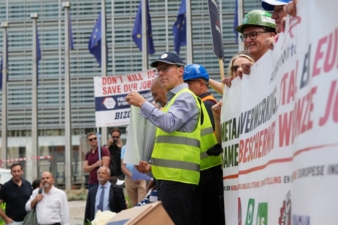
Climate policy must address both sides of competitiveness: imports into Europe and exports from Europe. © Eurometal
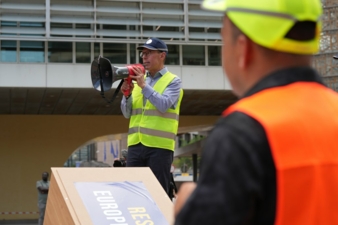
Eurometal is the European Federation of Steel, Tubes and Metals Distribution and Trading. © Eurometal
While Parliament has taken an important step by recognising that carbon leakage has moved beyond primary materials into downstream manufacturing, significant gaps remain that continue to undermine the competitiveness of European manufacturers. Eurometal explains why extending CBAM is necessary, why the current proposal remains incomplete, and why Europe needs a broader value-chain approach to ensure that climate policy supports industrial competitiveness rather than accelerating the relocation of manufacturing outside the European Union.
The European Parliament's adoption of its position on the extension of the “Carbon Border Adjustment Mechanism (CBAM)” to downstream steel and aluminium products represents an important recognition of a problem that Eurometal and the wider European manufacturing value chain have highlighted for years: carbon leakage has moved downstream.
Goods manufactured outside the European Union from steel and aluminium increasingly enter the EU market while avoiding carbon costs borne by European industry. Parliament’s decision is therefore a welcome signal that policymakers are beginning to acknowledge the reality faced by European manufacturers, processors, service centres, distributors and traders.
However, while the direction is correct, the proposal remains insufficient to restore fair competition for Europe’s industrial value chains.
An incomplete product scope leaves major loopholes open
The fundamental challenge is not whether CBAM should cover downstream products. It should. The challenge is that the proposed extension remains far from comprehensive. Even with the significantly expanded product list supported by Parliament, large numbers of steel-containing and aluminium-containing goods remain outside the scope of CBAM.
Every product category left outside the mechanism becomes a potential circumvention route. Global suppliers will naturally redirect production towards categories that remain exempt, moving additional processing steps outside Europe while continuing to access the EU market. This risks creating a shifting landscape of carbon leakage rather than preventing it.
Eurometal has consistently argued that carbon leakage is no longer limited to primary steel and aluminium. It increasingly occurs through components, assemblies, equipment and finished goods where embedded steel is only one element of the final product. A partial extension therefore risks moving the problem rather than solving it. The scope should ultimately cover the full spectrum of steel-intensive and aluminium-intensive products where significant embedded emissions are present.
The timeline comes too late for Europe's industry
The second major concern is timing. European manufacturers are already facing the consequences of regulatory asymmetry. Production relocations, weakening investment decisions and rising imports of steel-intensive manufactured goods are occurring today, not in several years' time. Eurometal has repeatedly highlighted the growing import penetration of downstream products and the resulting pressure on European industrial value chains.
A delayed implementation risks allowing further erosion of Europe's manufacturing base before effective corrective measures are in place. Businesses make investment decisions years in advance. Every additional year during which loopholes remain open creates incentives to establish production outside the EU while continuing to serve the European market.
The objective of CBAM is to prevent carbon leakage. If meaningful coverage arrives only after substantial leakage has already taken place, Europe risks protecting emissions accounting while losing industrial capacity.
No answer yet for EU exporters
Perhaps the most significant structural weakness remains untouched. European manufacturers producing for global markets continue to pay EU ETS-related carbon costs directly or indirectly through their material inputs. When they compete in export markets against producers located in countries that apply no equivalent carbon costs, they do so at a competitive disadvantage.
The current CBAM debate focuses almost exclusively on imports. Yet European industry also competes outside Europe.
A European machinery manufacturer exporting to Asia, Latin America, Africa or North America cannot recover the carbon costs embedded in steel and aluminium purchased within the EU. Meanwhile foreign competitors frequently face no comparable burden. The result is an export handicap for EU industry.
Until a credible mechanism exists to neutralise carbon costs for exports while remaining compliant with international trade obligations, Europe will continue to expose its manufacturing sector to an uneven global competitive environment.
Climate policy must address both sides of competitiveness: imports into Europe and exports from Europe. Today, only one side of that equation is partially covered.
CBAM alone cannot restore competitiveness
Even if the downstream CBAM extension were comprehensive and immediately effective, it would still address only one element of the cost gap faced by European manufacturers. Steel consumed by European industry carries a range of regulatory costs that are not fully reflected in the price structures of many competing non-EU suppliers. Carbon costs are only part of the equation. A particularly important unresolved issue remains the interaction between CBAM and trade defence measures. Anti-dumping duties, anti-subsidy measures and safeguard-related restrictions continue to contribute to a structurally higher steel price level within the European market. Meanwhile, manufacturers outside the EU often source steel at significantly lower global market prices.
As a result, an imported finished product may continue to enjoy a substantial competitive advantage even when CBAM obligations are applied. The producer has benefited from lower steel input costs throughout the manufacturing process, while European manufacturers have carried both higher material costs and higher regulatory costs. This creates a fundamental imbalance. Europe is effectively applying carbon correction only to one component of a wider competitiveness challenge.
Eurometal has therefore consistently called for a coherent value-chain approach that addresses not only carbon leakage but also regulatory asymmetries affecting the broader manufacturing ecosystem. Measures that apply to steel must not create incentives for the importation of steel-containing products manufactured elsewhere.
Europe needs a value-chain strategy
The European Parliament's position is an important acknowledgment that carbon leakage has moved beyond primary materials and into downstream manufacturing. This recognition deserves support.
Nevertheless, Europe should avoid the mistake of considering the problem solved. To safeguard industrial competitiveness, policymakers must:
– Extend CBAM coverage to all relevant steel-intensive and aluminium-intensive products.
– Accelerate implementation timelines.
– Develop an effective solution for EU exporters bearing carbon costs in global competition.
– Address the cumulative impact of trade defence measures and other regulatory cost burdens throughout the manufacturing value chain.
– Ensure that climate policy protects industrial activity within Europe rather than encouraging its relocation.
A truly effective industrial policy must protect the entire European value chain, from steel production and distribution to processing, manufacturing and exports. Anything less risks reducing Europe's emissions on paper while exporting jobs, investment and industrial know-how in practice.
Europe does not need carbon leakage to become more sophisticated. It needs climate and trade policies that finally recognise how modern industrial value chains actually work.
“Today’s vote is a step in the right direction, but it does not yet deliver a level playing field for European industry,” said Alexander M. Julius, President of Eurometal. “The proposed scope remains incomplete, implementation is too slow, and there is still no solution for EU exporters carrying carbon costs when competing globally. Moreover, CBAM alone cannot offset the broader cost disadvantage faced by European manufacturers due to higher steel prices and regulatory burdens. Europe must protect the entire value chain if it wants to prevent carbon leakage and deindustrialisation.”
Eurometal is the European Federation of Steel, Tubes and Metals Distribution and Trading. It represents companies active throughout the European steel and metals value chain and advocates for competitive, sustainable and resilient industrial markets across Europe.