19/03/2026 – An innovative R+D pilot line for stainless steel wires and bars
From traditional drawing to smart manufacturing
The steel industry is facing increasing competitive pressure alongside steadily rising quality expectations from end users. Conventional materials and manufacturing technologies are reaching their performance limits and often fail to meet all key requirements simultaneously.
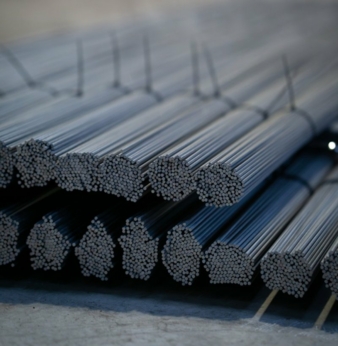
R+D pilot line – processed bars with tighter dimensional tolerances, and improved sustainability. © BHH Mikrohuta
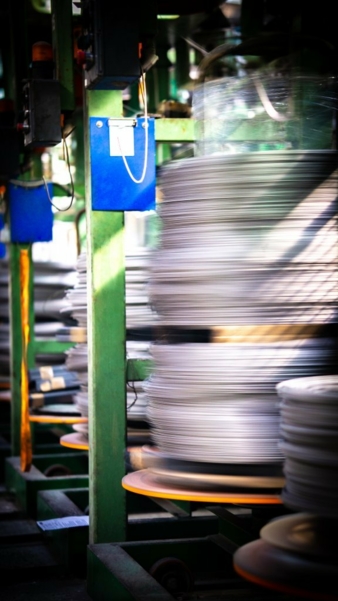
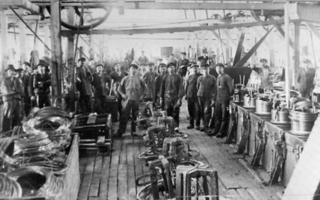
BHH Mikrohuta is a Polish manufacturer of stainless steel and nickel alloy wires and bars founded in 1973 and part of the Valbruna Group since 2001. © BHH Mikrohuta
This is particularly evident in stainless steels for advanced applications in the medical, aerospace, automotive, petrochemical, and architectural sectors, where high mechanical strength, superior surface quality, and tight dimensional tolerances must be achieved concurrently. At the same time, European environmental standards are increasingly requiring manufacturers to balance performance, efficiency and sustainability.
Addressing these issues requires next-generation manufacturing solutions, which are a central focus of modern metallurgy.
Industry context and pilot line concept
In response, BHH Mikrohuta, a Polish manufacturer of stainless steel and nickel alloy wires and bars founded in 1973 and part of the Valbruna Group since 2001, has initiated an ambitious technological development program supported by the European Funds for a Smart Economy (FENG). The project aims to establish an advanced R+D pilot line that enables the development, validation, and scalable implementation of innovative, energy-efficient, and environmentally friendly manufacturing processes, enhancing product quality while supporting sustainable and high-performance stainless-steel production.
The project is carried out in close collaboration with an experienced technical university, whose scientific expertise and laboratory facilities support both theoretical and practical studies. The partner provides guidance for optimising technical solutions and validates project assumptions in the laboratory before scaling up to pilot production.
The project also involves multiple industrial partners, including suppliers of feedstock materials and European leaders in technical equipment. This collaboration leverages interdisciplinary expertise to identify and implement innovative solutions beyond existing production technologies.
The pilot line integrates advanced heat treatment technologies, digital production control systems, and intelligent process monitoring solutions, forming a flexible R+D platform for high-performance stainless steel wire and bar manufacturing.
Main challenges
Manufacturers face difficulties in producing high-quality stainless steel with uniform mechanical properties along the entire product length. Conventional drawing, straightening and heat treatment processes often cause surface defects, microcracks, and residual stresses, all of which affect the material’s reliability in further processing, such as machining, or in demanding high-tech sectors.
In conventional heat treatment processes, the propagation of heat from the surface to the core can be uneven due to the combined effects of convection and radiation, which is especially critical as the main underlying cause of microstructural variability, higher scrap rates, and increased material waste. These limitations lower efficiency and hinder the achievement of modern quality standards.
In addition, traditional technologies struggle to meet stricter EU environmental requirements regarding energy and CO2 emissions per unit of product, highlighting the need for more efficient and sustainable production methods.
These challenges reflect real, day-to-day constraints in industrial stainless steel manufacturing, highlighting the need for new production technologies that simultaneously improve quality, reduce energy use, and minimize waste and environmental impact.
Innovation and development on the way to process excellence
Under the Feng project, BHH Mikrohuta is developing an advanced R+D pilot line designed to support high-performance, sustainable production of austenitic, ferritic, and duplex steels, as well as pure nickel and nickel alloys in the form of wires and bars for demanding applications. The project encompasses the installation of a coordinated set of modern equipment alongside the modernization of the existing, unique production infrastructure, with a particular focus on advanced heat treatment, while also integrating digital process control and intelligent monitoring, all supporting the development of high-performance stainless steel and nickel-based wire and bar materials.
A key element of the pilot line is a new contactless heat treatment furnace, providing flexible thermal processing with precise control of process parameters while minimizing surface interaction. Both the new furnace and upgraded existing thermal systems are designed to improve temperature stability, enhance process repeatability, and enable integration with advanced surface protection measures, contributing to superior surface quality of wires and bars.
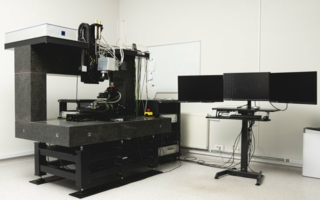
Additional elements enhancing the technological sophistication of the pilot line include digital and intelligent process management solutions. A Production Execution & Management System (PEMS) continuously consolidates data from drawing, heat treatment, and finishing operations, enabling real-time process monitoring and operational decision-making. Neural-network-based monitoring, combined with analysis of process signals and surface data, enables early detection of deviations, supporting predictive maintenance, particularly through continuous monitoring of critical components such as drawing die wear. Surface quality assessment is further enhanced by advanced digital microscopy, allowing more detailed analysis of previously unmonitored parameters.
Benefits and industrial impact
In addition to the improvements already described for wires, including superior surface quality, dimensional stability, and advanced process control, the pilot line enhances the mechanical processing of bars. Dedicated processes such as drawing, straightening, and advanced surface finishing enable an expansion of the bar product range from diameters of 3mm-5 mm to 2mm-11mm and beyond round bars to include hexagonal bars. These improvements reduce production takt time by approximately 30% across the entire expanded product range.
At the same time, the process chain ensures tighter dimensional tolerances, higher repeatability, and more precise microstructure control, critical for demanding end-use applications. These improvements also help reduce scrap and improve energy and CO2 efficiency per unit of product, supporting compliance with EU sustainability requirements without compromising material quality and performance.
Brief summary
Overall, the Feng-supported pilot line provides a modern, flexible, and digitally integrated manufacturing environment, expanding the product portfolio while addressing key technological, quality, and environmental challenges. It supports efficient, repeatable, and sustainable stainless-steel and nickel-based wire and bar production in line with rising market expectations and EU requirements, while also enabling further implementation and development of innovative production technologies.
wire 2026, hall 12 booth C 60
BHH Mikrohuta Sp. z o.o.
Porozumienia Dabrowskiego 1980 nr 11
42-530 Dabrowa Górnicza
Contact person is Mateusz Bara
Tel.: +48 32 4613431
mateusz.bara@mikrohuta.pl
www.mikrohuta.pl
www.valbruna-stainless-steel.com