15/04/2026 – Metal recycling solutions
Green steel: why scrap metal is key to cutting CO2
Steel is the backbone of modern infrastructure, but its production is one of the most carbon-intensive industrial processes. As industries seek to cut emissions in line with global climate commitments, the push for “green steel” has intensified. As Carl-Gustaf Göransson, CEO of Lindemann Metal Recycling, explains, at the heart of this transition lies a crucial, often overlooked, material – scrap metal.
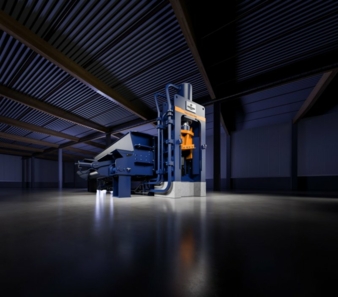
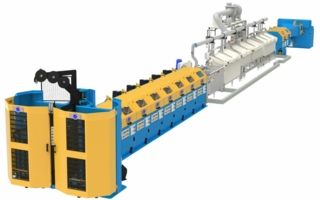
Lindemann “NxtCut” scrap metal shear – used to reduce the material to a compact size. © Lindemann
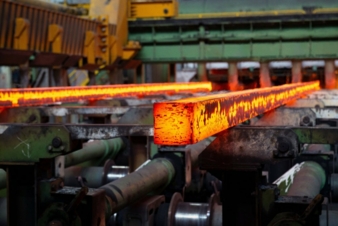
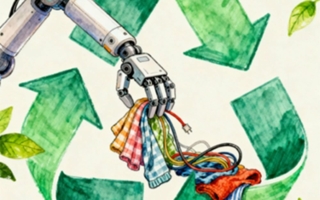
‘Green steel’ refers to steel produced using processes that significantly lower CO2 emissions. © Lindemann
Steel production currently accounts for approximately 8% of global CO2 emissions. Traditional methods rely on blast furnaces, which burn large amounts of coking coal to reduce iron ore, releasing substantial greenhouse gases. As governments impose stricter carbon reduction targets, steelmakers are under mounting pressure to find cleaner alternatives.
‘Green steel’ refers to steel produced using processes that significantly lower CO2 emissions. This includes using hydrogen as a reducing agent, direct electrification, and the growing adoption of electric arc furnace (EAF) technology. Unlike blast furnaces, EAFs use electricity to melt scrap metal, bypassing the need for raw iron ore and significantly cutting carbon emissions.
Scrap metal has emerged as a key player in this transformation. Recycling scrap steel requires up to 74% less energy compared to producing steel from raw materials. It also drastically reduces CO2 emissions, with studies showing that using one ton of scrap steel can save nearly 1.5t of CO2.
Moreover, steel is infinitely recyclable without losing its properties, making it one of the most sustainable materials available. By increasing the share of scrap in steel production, industries can make significant strides toward net-zero targets, while also reducing reliance on mining-intensive virgin iron ore.
Scaling scrap-based steel production
Despite its advantages, the transition to scrap-based steel production faces several challenges. While scrap steel availability is increasing, demand is set to rise faster. Some regions, particularly in developing economies, lack efficient scrap collection and processing infrastructure. Another concern involves impurities in scrap metal, such as copper, which can impact the quality of high-grade steel. To counter this, advanced shredding, sorting and refining technologies – such as those developed by Lindemann and its partners – ensures that scrap-based steel meets stringent industry standards.
A final factor to consider is that, while EAFs produce fewer emissions, their environmental benefit depends on electricity sources. If powered by fossil fuels, the CO2 reduction advantage diminishes. Therefore, the shift to renewable-powered EAFs is critical.
From scrap to essential component
To meet global decarbonization goals, the share of recycled steel in production must grow. Steelmakers are already investing in innovative technologies, such as hybrid furnaces that combine hydrogen-based reduction with scrap melting. At Lindemann our metal recycling equipment is incorporating new technologies, soon to include AI-driven scrap sorting, to improve material purity.
Policymakers are also introducing incentives and regulations that encourage scrap recycling. The European Union’s Green Deal, for example, includes measures to promote circular economy principles, which will drive higher scrap utilisation in steelmaking.
Scrap metal is no longer just an industrial byproduct; it is the foundation of a more sustainable steel industry. By increasing scrap-based production, investing in cleaner energy, and improving recycling infrastructure, the steel sector can take meaningful steps toward cutting emissions and achieving global CO2 reduction targets.
As industries race toward net-zero, one thing is clear: the future of steel is green, and scrap metal is the key to making it happen.
Lindemann Germany GmbH
Tel.: +49 211 2105-0
Grafenberger Allee 337a
40235 Düsseldorf/Germany
Contact person is Maria Kaufmann
maria.kaufmann@lindemann-partners.com
www.lindemann-metalrecycling.com
About Lindemann
Lindemann is committed to sustainable practices and is a pioneer in the circular reuse of metals. For more than a century the company has been the international benchmark in the design and production of premium shredders, shears and presses used in the metal recycling industry. And not just machinery: its products are supported around the clock by a global service and solutions network that is dedicated to supporting long term customer success. At any one time 300,000 different original spare-and wear parts are available from the company’s global parts warehouse.