20/03/2026 – Precisely addressing the core of digitalisation
The origin of digital VR
With the arrival of the digital era and the gradual adoption of smart manufacturing concepts, manufacturers are presented with an attractive vision of higher efficiency and more precise cost control. In response, Pioneer Machinery developed “Smart FA” to help customers to transform traditional wire and cable factories into smart factories.
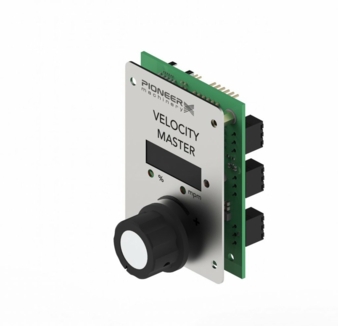
Fig. 1: Pioneer digital VR processing module. © Pioneer
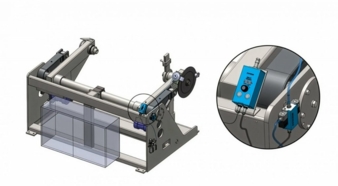
Fig. 2: Digital VR for pay-off tension control. © Pioneer
However, during the actual transition toward smart manufacturing, they repeatedly heard the same feedback from their customers: the greatest obstacle is often not new technology, but existing machines that continue to perform reliably yet lack digital read and write capabilities. These long-serving “old allies” remain indispensable on the production floor, but they have become a bottleneck in the digitalisation process.
Most of the existing equipment still relies on analogue control. However, the inherent physical limitations of analogue systems restrict direct access from the digital world, creating a major barrier to digital transformation. To address this challenge, Pioneer Machinery developed the Digital VR (Digital Potentiometer) technology to enable process visibility and digital integration without disrupting existing operations.
Core technology: achieving digital transformation without changing operator habits
A traditional machine knob functions like a one-way street. While IoT servers may read the parameter values, they cannot adjust them remotely. Operators still need to move between machines and manually fine-tune settings on site. The value of digital VR lies in converting this one-way path into a two-way channel, enabling the most critical digital upgrade without further hassle.
Old habits die hard
Operators do not need to learn a new way of working. Digital VR uses a rotational encoder to replicate the potentiometer inside the traditional knobs. From the operator’s perspective, the tactile experience remains unchanged. However, each rotation now generates precise digital signals instead of analogue ones, eliminating the need for retraining or adaptation.
Bidirectional data flow
When an operator adjusts a parameter at the machine, the host system records it simultaneously. Likewise, authorised personnel can accurately adjust parameters from a remote management system. This bidirectional read and write capability not only eliminates discrepancies in production records, but also supports knowledge transfer and process standardisation.
Direct one-to-one replacement
Digital VR is designed as a modular replacement that emulates the behaviour of traditional potentiometers. Digitalisation can be completed simply by removing the original VR and installing the digital VR module with minimal additional communication wiring. There is no need for major rewiring or replacement of the entire control panel.
Technology extension: modular digital upgrade kits for real production pain points
With the completion of digital VR, the final barrier to digitalisation is removed, enabling full IoT integration for old existing machines. Based on this foundation, and in response to a wide range of customer retrofit requests, we developed a series of key upgrade modules that combine standalone operability with smart factory connectivity. These modules allow customers to achieve tangible technological benefits at minimal cost.
Pioneer objective is to maximise the value of existing assets. They understand that replacing machines that have operated reliably for years is a difficult decision. Yet if minor production issues remain unresolved, the hidden costs can accumulate rapidly. This is the motivation behind their modular upgrade strategy: to make smart transformation a practical, deployable tool rather than a distant concept.
Instead of bearing the risk and downtime associated with replacing entire machines, customers can select targeted upgrade modules, much like assembling building blocks, to address their most pressing challenges. In just a few hours, these modules arm “old allies” with a digital brain-powered “assistant”, precisely resolving real production bottlenecks.
Pay-off tension control
This module can be directly installed on existing pneumatic pay-off brake systems. It automatically compensates for changes in spool diameter, maintains constant tension, and forecasts optimal spool change timing. Operators no longer need to continuously monitor and manually adjust tension, reducing labour requirements while improving product quality stability and minimising losses caused by human oversight.
Intelligent traversing system
On old existing take up machines, variation of spool size and position on each loading/unloading require frequent manual adjustments. The intelligent traversing system integrates digital signal processing, stepper motor control, and laser-based automatic shaft-edge positioning. During spool changeovers, operators no longer need to re-enter spool dimensions or fine-tune alignment, significantly improving changeover efficiency and winding quality.
Precision dosing module
In stranding processes, high-temperature compacting die stands often require the addition of volatile liquids to dissipate heat and distribute anti-oxidation agents. The flow rate and mixture ratio must be adjusted dynamically between different processes and speed. Over-dosing causes contamination, while under-dosing leads to decolouration and quality defects. Missed refills can even result in scrapped products, traditionally relying on experienced operators for supervision. This module enables precise synchronised control of dosing volume and provides automatic alarms, reducing the risk of costly losses due to human error.
Synchronised strobe monitoring
Issues such as “excellent quality when started, but degradates as the speed increases” are a common challenge on taping lines. If production speed cannot be reduced, operators are often forced into repeated trial-and-error adjustments. With the synchronised strobe monitoring module, a visual freeze effect can be achieved without stopping or slowing the machine. Adjustable via a control knob, it allows clear observation of wires and tape under high-speed operation, enabling targeted adjustments and significantly reducing trial time and material waste.
Extending the life of your old machines for another decade
In today’s increasingly competitive market, and with growing challenges in skill transfer, management pressure often stems from small yet high-cost uncertainties on the production floor. By combining Digital VR with our application-specific upgrade modules, the objective goes beyond digitalisation for efficiency and quality improvement. It is about helping manufacturers establish a standardised production system that does not rely on specific individuals and remains robust against environmental and operational variability, all within a controlled budget.
Through these focused upgrades, proven old machines can be revitalised. Manufacturers can protect margins while strengthening their resilience to face the challenges ahead.
This year, Pioneer Machinery will demonstrate these upgrade solutions live at their booth. They sincerely invite to visit them and discuss any customised retrofit requirements with our technical consultants. Pioneer look forward to meeting visitors at “wire 2026” and exploring the next evolution of their factory together.
wire 2026, hall 11 booth F 52
Pioneer Machinery Co. Ltd.
No.9, Minzu St, Tucheng Dist,
New Taipei City 23679, Taiwan
Contact person is TW Chang
Tel.: +886-2-2268-1188
sales@pioneerm.com
www.pioneerm.com/en