05/11/2026 – Associations / UK Metals Council
Metals sector reveals eight-point action plan
An eight-point action plan has been revealed by the UK metals sectors to help it combat continuing high prices, trade policies that hamper competitiveness and a declining appetite to invest in apprentices.
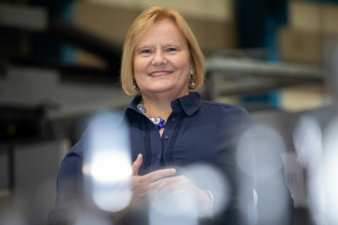
After four years at the helm, Rachel Eade will be stepping down as Chair of the UK Metals Council, passing the baton over to Dr Pam Murrell. ©
The rallying call was made by the UK Metals Council (UKMC) on the eve of UK Metals Expo (Nov 4th to 5th), the industry’s largest show that is due to attract 300 exhibitors, 100 keynote speakers and thousands of visitors from the supply chain.
Representing almost 11,500 companies and 1 million employees, the trade body is calling for government to immediately simplify regulation and administrative burden, whilst also unlocking the circular economy and securing UK scrap resource for an industry that is critical to sovereign capability.
UKMC Chair Rachel Eade also believes more can be done to reduce unnecessary customs, quotas and trade friction, with an urgent need to change procurement approaches for defence and clean energy programmes that will boost guaranteed UK content. The action plan follows the release of the largest State of the Metals Industry report yet, with 200 companies canvassed for their views on the current business landscape.
A near staggering four in five (79%) respondents said that current trade policies do not support their competitiveness, with 89% reporting that raw material prices are too high and 69% admitting that energy is still a major challenge. Three quarters reported a limited pool of qualified candidates and almost half struggle to attract people with the skills or expertise they need.
“The findings leave little doubt about where action is needed,” explained Rachel Eade, MBE. “They provide a compelling evidence base for our eight key priorities that focus on securing competitive energy, maximising the value of UK scrap and the circular economy, addressing the skills challenge, strengthening procurement, and protecting and growing the UK’s supply and value-added chain.”
She continued: “With steel now recognised as a critical foundation industry, we urge Prime Minister Andy Burnham to translate positive rhetoric into practical action that strengthens domestic manufacturing supply chains where it matters most: on the factory floor. For that transformation to be realised, manufacturers need confidence that the Industrial and Steel Strategies will deliver meaningful change through competitive energy prices, access to skills, proportionate regulation, and a planning system that supports investment and growth.”
The UK Metals Council Report, which will be discussed in full at the opening day of the UK Metals Expo, also revealed:
– Just 14% of the metals sector has high confidence in the future
– 65% say innovation is a high priority, yet just 21% are looking to explore grants or funding
– Interest in apprenticeships is waning, with an 11% drop in the number of firms seeing vocational learning as a priority (57%)
– More than half of the metals sector (54%) is making steady progress towards Net Zero
– Less than 10% of companies are fully ready for the introduction of the Carbon Broder Adjustment Mechanism (CBAM).
Rachel went on to add: “UK manufacturers remain resilient, innovative, and ready to invest. However, SMEs in particular need a fair and competitive environment in which they can grow, create jobs, and expand exports. This year’s findings show that many companies are successfully diversifying, with construction and energy joining automotive as the three most significant sectors served by the industry.”
New Chair
After four years at the helm, Rachel Eade will be stepping down as Chair of the UK Metals Council, passing the baton over to Dr Pam Murrell, who has been involved in the sector for the last thirty years.
She is a passionate advocate for all things metal and has been the CEO of the Cast Metals Federation and current Vice President of the Institute of Cast Metal Engineers and Chair of the Industry Committee of the Worshipful Company of Founders.